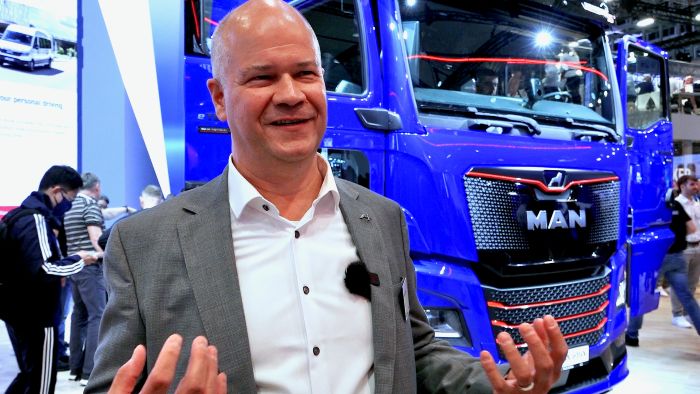
ITOY talks to MAN VP and Head of Design Stephan.
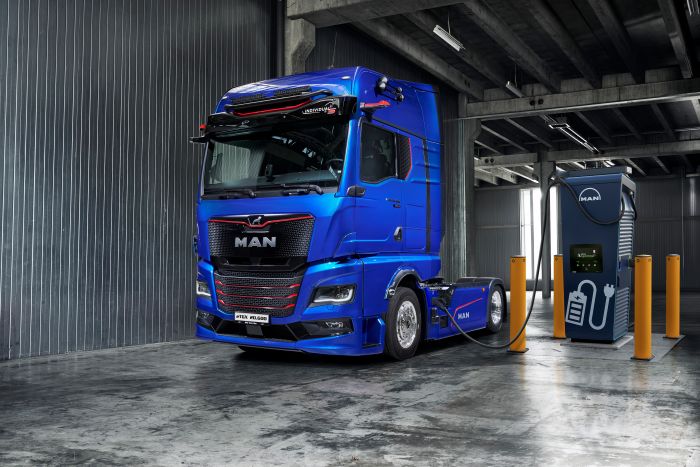
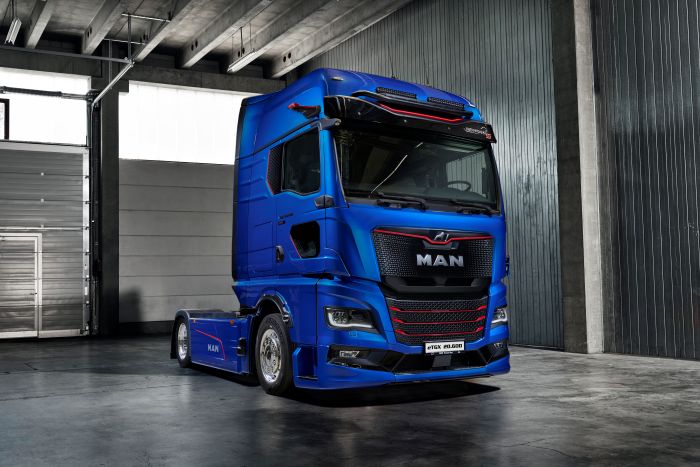
MAN presented the new eTGX at IAA Transportation. We had the opportunity to meet its creator, Stephan Schönherr, Vice President and Head of Design & HMI at MAN Truck & Bus SE, for an exclusive interview about the brand’s design language, the role of the driver, and why “form follows function” is no longer enough today.
Mr Schönherr, you have shaped MAN’s design language for decades. In a single sentence, what makes a MAN a MAN?
A MAN is friendly and inviting, expresses the strength of the lion and, at the same time, is modern, dynamic and timeless.
Where does the actual development of a new truck begin?
Ideally, with all relevant stakeholders working together right from the start. Design and HMI need to be involved at a very early stage. We need to know, for example: What cooling capacity do we need? Where are the technical and electronic components located? How many storage compartments, openings or service access points are required? What HMI requirements and adaptations to the operating and ergonomic concept are necessary?
Especially in a commercial vehicle, everything has to be extremely functional. Service and TCO, as well as user and customer requirements, play a central role. The earlier we know all the relevant requirements, the better we can integrate them into a holistic design and HMI concept.
So design begins long before the visible exterior takes shape?
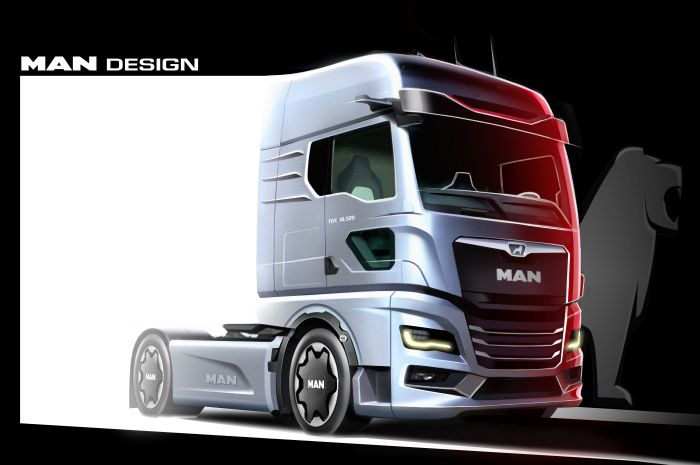
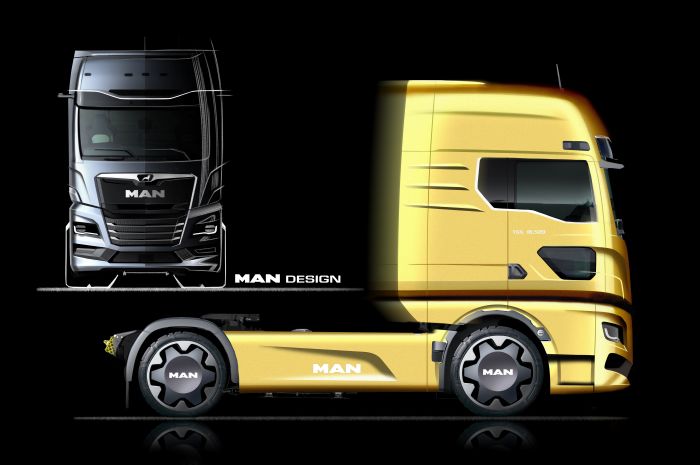
Absolutely. In the past, a lot was drawn by hand, and we still do that to some extent today. But we move into 3D very quickly and can immediately compare an idea with the packaging and engineering requirements.
As designers, our ambition is not simply to make a predefined package look attractive, but to contribute our own vision. Otherwise, you quickly end up with a vehicle in which everything may be technically accommodated somehow, but which is neither particularly attractive nor aerodynamically optimal.
How important has aerodynamics become for design?
Very important. Aerodynamics and efficiency have become major topics. At the same time, people have become more important too. Today, it is no longer enough simply to give a driver a vehicle and say: this is what you have to drive. Drivers pay very close attention to the vehicle they work in. And if necessary, they will move to a company that offers them the more attractive vehicle.
Does the classic principle “form follows function” still apply?
No! Today, I would rather say: form follows demand or form follows needs. Some technical functions could now be made smaller than would actually make sense for the user. A smartphone, for example, could be made very small – but at some point, you would no longer be able to hold it properly. If you simply say, “Form follows function, so that is how it has to be,” you are sometimes making things too easy for yourself. Ultimately, it is about people’s needs.
And on top of that, there are numerous technical and legal requirements. How much creative freedom is actually left?
A surprising amount. That is precisely the great art of commercial vehicle design: taking a fundamentally functional, requirement-driven form and turning it into something attractive and practical for the user, the environment and the brand.
At MAN, we deliberately take an evolutionary rather than revolutionary approach. Customers should retain a sense of familiarity and orientation. A MAN continues to evolve, but it must always remain recognisable as a MAN.
Of course, individual features change. Perhaps more cooling air is needed in one area, a mirror disappears or new technical possibilities emerge. But the fundamental design language remains.
What has changed most significantly with the current generation?
We have cleaned up the surfaces considerably and closed many of the openings in the front. This gives the vehicle a more homogeneous and calmer appearance.
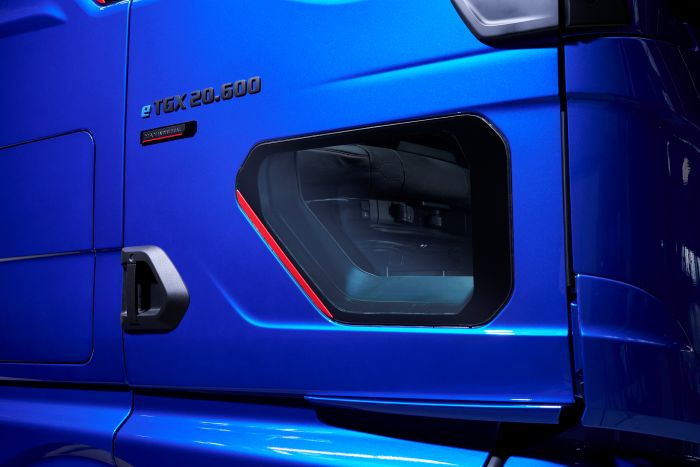
There are also new features such as our aerodynamic Power Blade. It combines air curtains, lighting and cooling. That is exactly the kind of solution I find exciting: intelligently combining several functions and, at the same time, creating a strong design element.
Your second major area of responsibility is HMI. What is the right way to develop a truck interior?
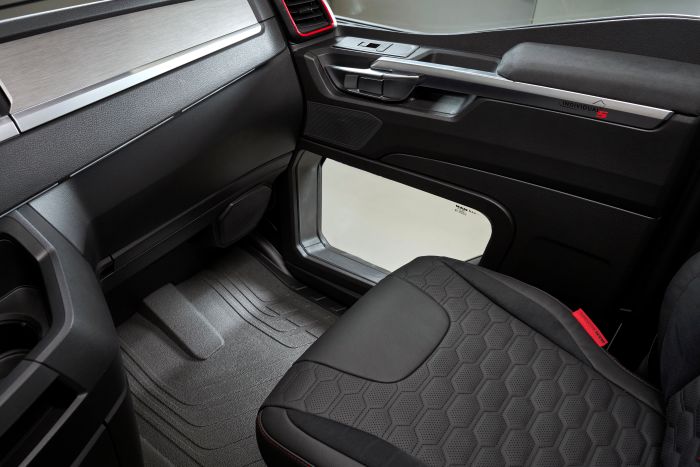
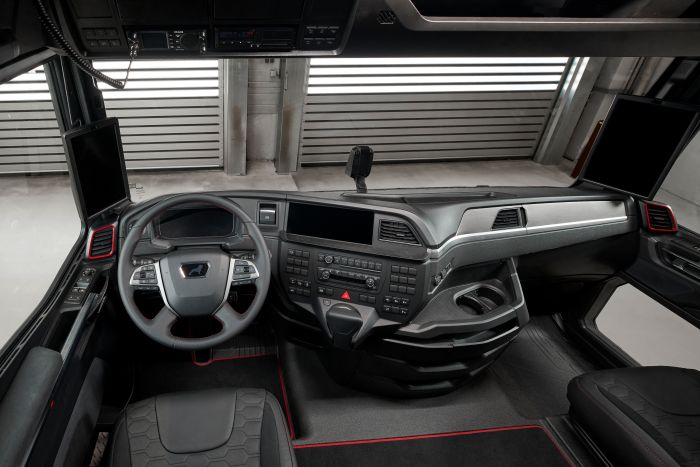
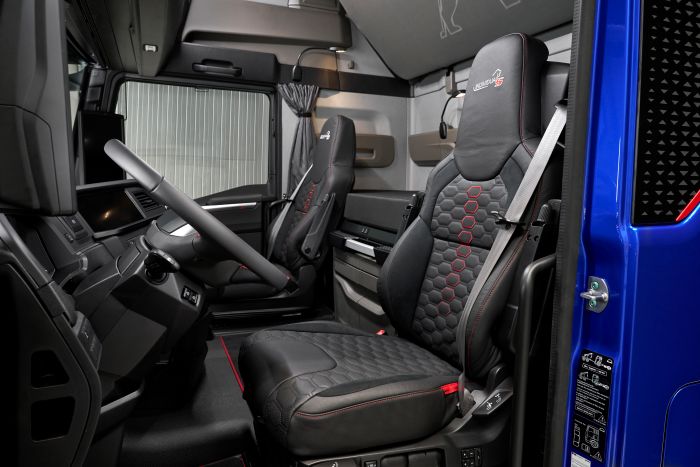
Around the human being. Very clearly. A commercial vehicle is a tool that people should actually enjoy using. Ergonomics and intuitive operation are among our most important objectives. “Simplifying Business.” Everything that is operated has to be intuitive to use and easy to reach.
We make a very deliberate distinction between different operating distances. The screens need to be positioned further away for optimum visibility, while everything the driver actively operates is brought closer. In this way, we build the interior step by step around the person and their requirements.
Ultimately, it is about achieving the best combination of usability and function: everything that is necessary – and nothing that is unnecessary.
Which design element of the new TGX do you personally like best?
I particularly like the way the design flows from the side into the front and how consistently we have developed the Single Frame. Then there are the pronounced character lines, the beautiful sculptural surfacing and the Power Blade strip.
Overall, we have smoothed things out, reduced visual activity and brought more calmness to the vehicle.
The front also looks considerably more powerful than before.
Yes. Our idea was: The lion matures with experience. In the past, it may have been a little more generic and straightforward. Now it has become more majestic.
We always say that the headlights are the eyes. Their new position creates a stronger, more distinctive lion-like gaze. Focused Vision! The vehicle remains friendly, while at the same time appearing confident and powerful.
Why is this emotional dimension so important to you in a commercial vehicle?
Because drivers spend a great deal of time in their vehicle. They should be proud of it.
When I pull into a truck stop, I want to be able to say: “I drive a MAN.” The vehicle should not only function; it should also convey confidence and radiate attractiveness and strength.
That is why we also support customisation. Customers and drivers should be able to configure the vehicle in a way that appeals to them.
What will the truck of the future look like?
Smoother and cleaner. (laughs) Of course, it is not going to turn into an egg. The requirements arising from function and application will remain. Turning radius, vehicle length and the interaction with the trailer all impose limits. But commercial vehicles will continue to evolve and, in some areas, move closer to passenger cars – particularly in terms of ergonomics, comfort and operation.
What will change in the interior?
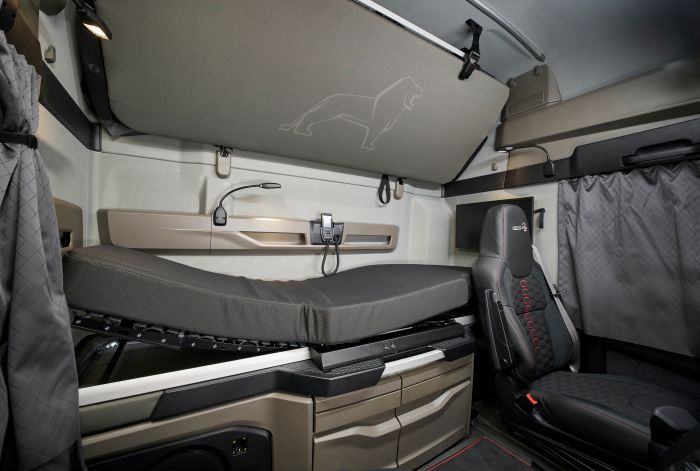
The interior space will continue to become more premium. Light, brightness, spaciousness, comfort, additional functions and a more homely feel will all become more important. At the same time, we need more flexible and modular concepts.
A driver working on a construction site has different needs from someone operating in long-haul transport. We want to address these different requirements even more precisely. For us, drivers are clearly at the centre of both design and HMI.
Of course, the TCO has to be right – but ultimately, the vehicle has to work exceptionally well for the person using it.